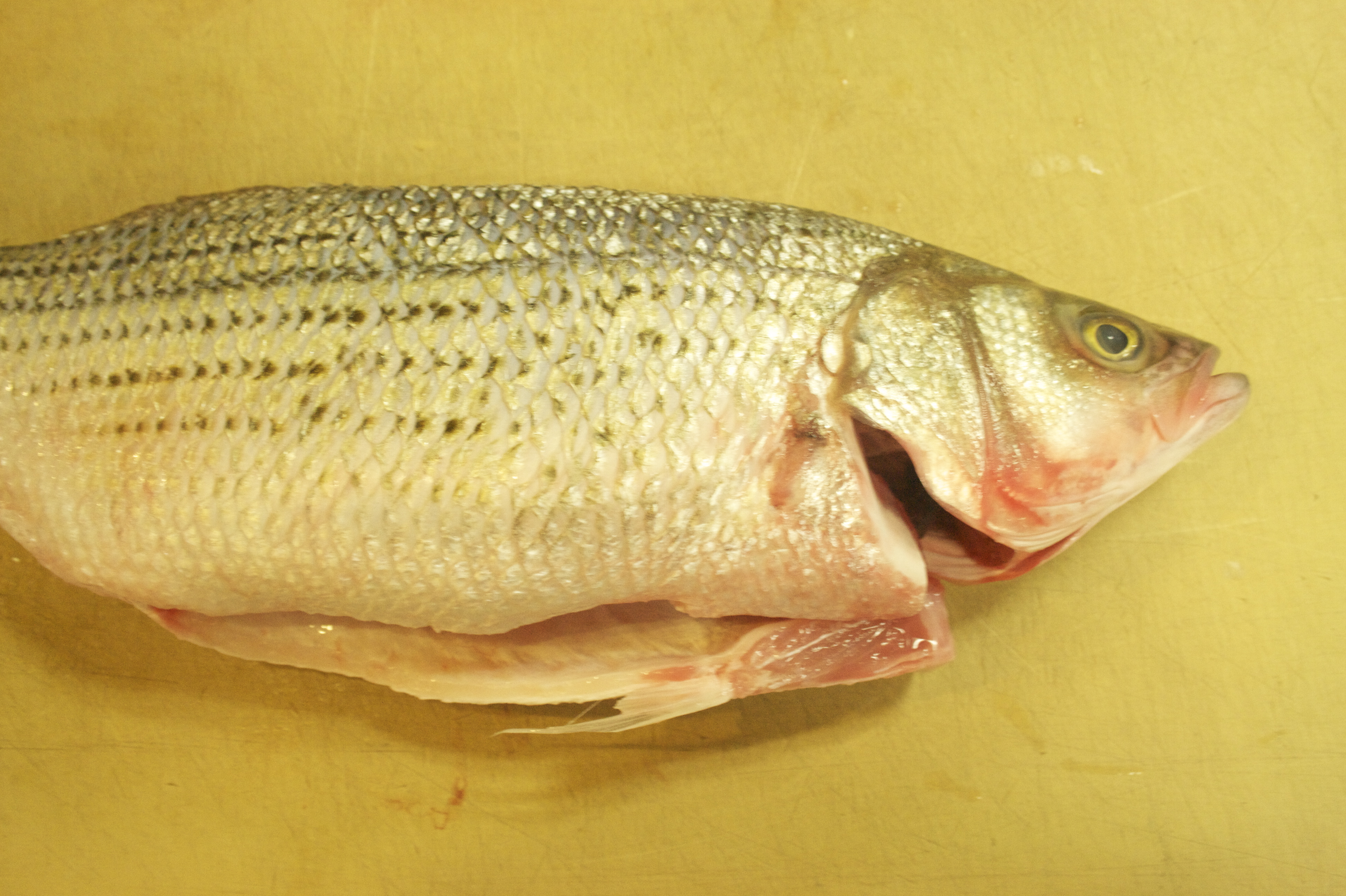
Mornings can be sluggish, but there’s no better wakeup call than the wafting smell of a box of bass and trout to whip you awake. This was my Monday morning reality.
Today’s challenge was to learn how to fillet both types of round fish (fish that swim vertically and have eyes on either side of their body) without butchering the meat. Watching Chef Laura gracefully weave her knife through this fish made it look easier than it actually is.

Chef Laura opening up the fish’s cavity
When it was our turn, I immediately turned into a cheerleader and feared picking up the fish not because it’s slimy or slippery, but because I think it has razor sharp fins that are going to slice off my fingers. (It didn’t, really, since my classmates were haphazardly grabbing them.)
The first step to dressing and filleting a fish is to make sure you clean it. That involves opening the belly cavity and slitting the thin membrane that covers the innards. It’s basically like that moment in Independence Day where the scientists are carefully cutting away the alien’s external membrane—that mucousy, thin layer—except my fish didn’t resurrect from the dead and strangle me to death. Thank God.
I’m really anal about fish bones. I’ve always had a fear of choking on them, which I’ve inherited from my father, so once I freed my fillet from the carcass, I tried to meticulously pull out every bone with a kitchen tweezer. Ladies, these tweezers suck compared to the ones we’re used to. This task takes forever, and I now understand why at some restaurants you might get a mouthful of pin bones.
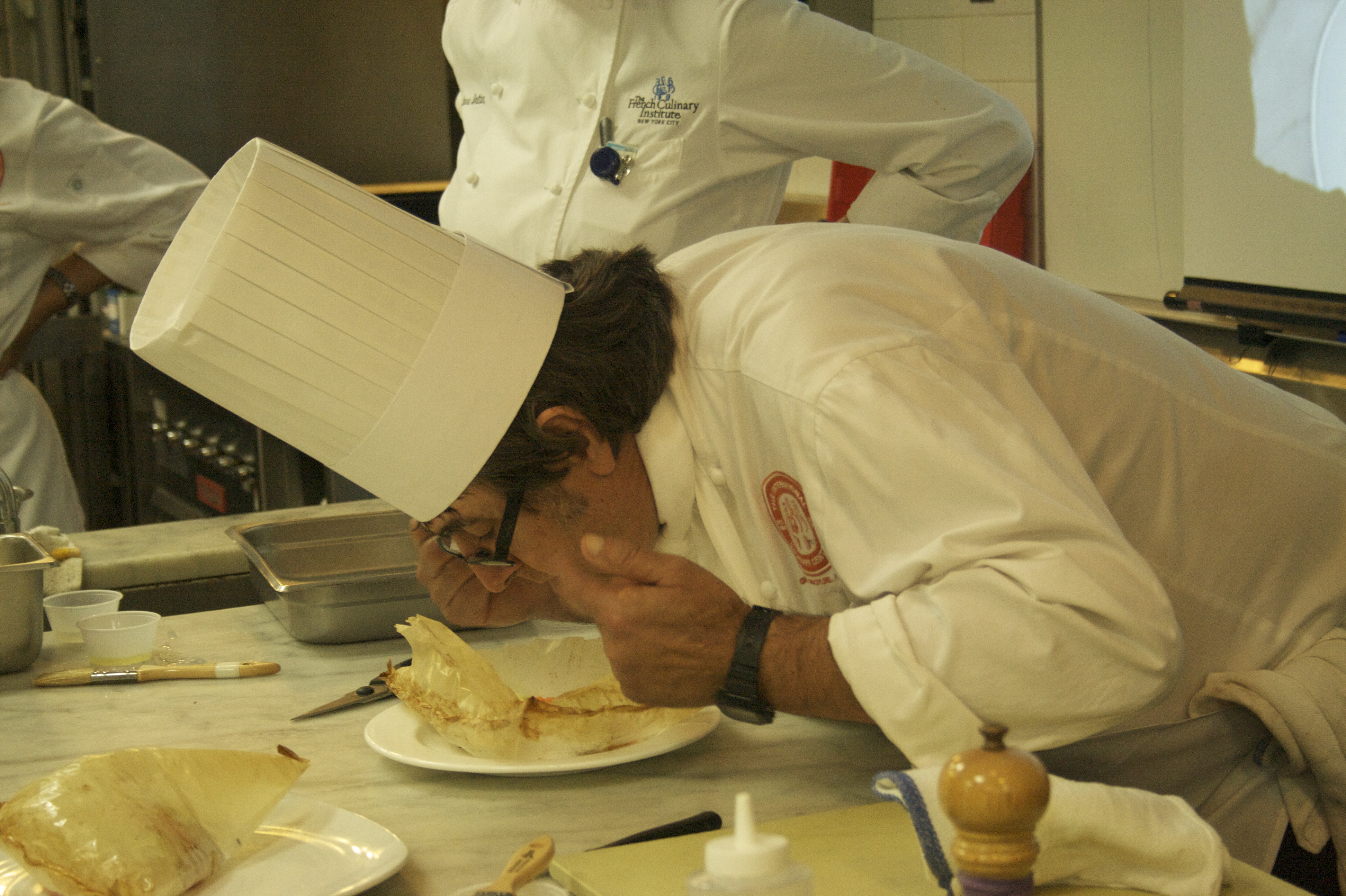
Chef smelling his papillote
Once we broke down these fillets, we transformed the sea bass into a poisson en papillote, or fish in a parchment pouch. It’s one of those culinary moments you say a prayer to the Gods that you hope everything turns out right: The fish has to be cooked, but not dry. And your parchment pocket must balloon up and not deflate before Chef sees it. If everything is done correctly (and for the most part, we did), when you cut open the bag (as if ripping into microwavable popcorn), you’re struck with a whiff of aromatic vegetables, herbs, and delicate fish that’s been steaming in white wine. This was my lunch. Jealous?

Shikha presenting our papillotes

Bass topped with a julienne of carrots, leeks, and celery
Our last dish for the day was one that Julia Child favors: Meunière. It literally translates to “Miller’s Wife,” but I have no idea how that relates to the butter sauce that floats this pan-fried fish. It’s simply sublime. We get a nice sear on the skin side of our delicate trout, and then drizzle a browned butter sauce that’s flavored with lemon segments and capers to brighten it up.

Trout Meunière
It’s amazing to think just two weeks ago we were all nervous about cutting a carrot, and now that carrot is just a small piece of today’s lesson.
TIP OF THE DAY: When frying fish, don’t flour your fish until you’re ready to fry it. Letting a dredged fish sit for too long will make the flour gummy and affect the sear.
 Fork Adventures
looks delicious! loving the julien vegetables and tournage potatoes!
Thanks, Jacks!
Meuniere is my favorite way to eat fish! I remember my chef told us on fish day that it was named for the millers wife because it was floured before searing. I guess the millers wife had plenty of flour to spare..
Ps photos look good. 🙂
Really? That’s fascinating. Thanks for sharing! (Can’t wait for your photo tutorial!)
Use needle nose pliers to remove pin bones, soooo much easier!